








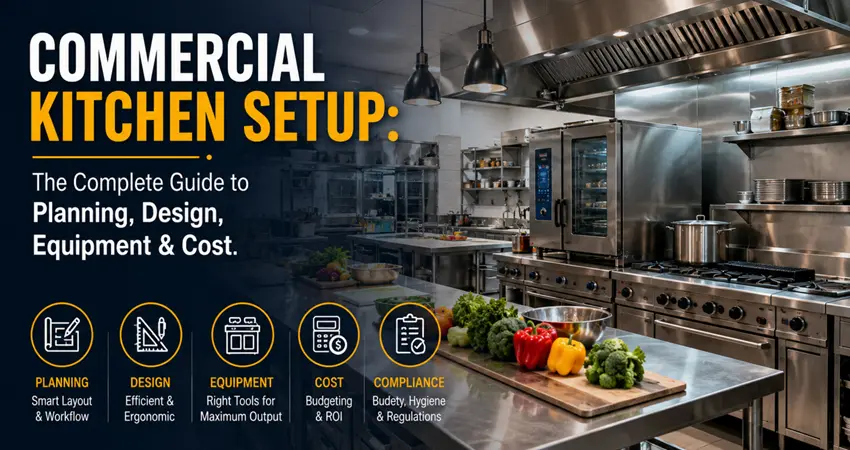
Setting up a commercial kitchen can feel like an overwhelming task. Whether you're launching a new restaurant, catering service, or food truck, the stakes are high. A well-planned and efficiently designed kitchen is crucial for your success. It's not just about cooking; it's about creating a streamlined operation that supports your culinary vision.
Imagine bustling chefs working in harmony while delicious dishes come to life. This dream requires careful planning and smart design choices. From selecting the right layout to choosing essential equipment, each decision impacts efficiency and productivity.
Dive into this complete guide on how to set up a commercial kitchen where we'll explore everything from the foundational considerations to cost breakdowns. Let's turn those culinary aspirations into reality!
When planning your commercial kitchen, start with the type of cuisine you'll serve. This influences everything from equipment to storage needs.
Next, consider local health and safety regulations. Compliance is crucial for operating legally and avoiding costly fines.
Space optimization plays a vital role too. Assess your workflow: how dishes move from preparation to service. A well-thought-out flow minimizes congestion and boosts efficiency.
Think about staffing as well. The size of your team will impact kitchen layout and equipment choices. Will you need extra prep stations or specialized tools?
Don't forget about utilities like gas, electricity, water supply, and drainage systems. These foundational elements can significantly affect design plans.
Budget wisely by prioritizing essential items first while allowing flexibility for unexpected costs down the line. Planning sets the stage for success in any culinary venture.
Designing your commercial kitchen starts with understanding the workflow. A well-thought-out layout minimizes movement, making cooking more efficient.
Consider the classic "work triangle" design. This connects the stove, sink, and refrigerator in a triangular format for easy access. It streamlines operations and optimizes space.
Another option is an assembly line setup. Ideal for high-volume restaurants, this approach allows staff to work side by side on different tasks without hindering each other's flow.
Don't forget about storage solutions. Incorporate shelving units and walk-in coolers to keep ingredients organized and accessible.
Utilize vertical space as much as possible! Overhead racks can free up valuable floor areas while keeping essentials within reach.
Natural light can also enhance a kitchen environment. If possible, include windows or skylights to create an inviting atmosphere that boosts morale among your team.
When setting up a commercial kitchen, the right equipment is crucial for efficiency and functionality. Start with cooking appliances like ovens, ranges, and fryers. These are the heart of any kitchen.
Don't overlook refrigeration units, as they keep ingredients fresh and safe. Walk-in coolers or reach-in refrigerators can be game-changers in terms of storage space.
Prep areas need dedicated tools too. Commercial mixers, food processors, and slicers enhance productivity during busy hours.
Investing in quality dishwashing systems is another must. A reliable dishwasher saves time and maintains sanitation standards efficiently.
Consider essential small wares like pots, pans, cutlery, and utensils. They may seem minor but play a significant role in daily operations.
Choosing the right mix of equipment not only boosts performance but also aligns with your specific menu needs.
Setting up a commercial kitchen involves various costs that can quickly add up. First, consider the space itself. Rental prices vary greatly depending on location and size.
Next, factor in renovations and design modifications. You may need to install specialized flooring or ventilation systems to meet health codes.
Equipment is another significant expense. From stoves and ovens to refrigerators and dishwashers, high-quality appliances are essential for efficiency and safety.
Don't forget about permits and licenses required by local authorities. These can incur additional fees but are necessary for legal operation.
Think about ongoing costs such as utilities, maintenance, and staffing. All these elements contribute to your overall budget when planning how to set up a commercial kitchen effectively. Balancing quality with affordability will ensure you create an efficient workspace without breaking the bank.
Regular maintenance is key to a thriving commercial kitchen. Start with daily inspections of all equipment and tools. Ensure everything is functioning properly, as this prevents costly breakdowns.
Establish a cleaning schedule that covers surfaces, appliances, and floors. A clean kitchen not only meets health codes but also creates a pleasant environment for staff.
Training your team on proper food handling practices helps prevent contamination and waste. This promotes safety while ensuring high-quality dishes are served consistently.
Keep an eye on inventory management. Monitor stock levels closely to avoid shortages or excess waste due to spoilage.
Encourage open communication among staff members about potential issues or improvements within the workspace. Creating a culture of collaboration leads to better problem-solving and operational efficiency over time.
Setting up a commercial kitchen is no small task. It requires careful planning, thoughtful design, and a solid understanding of the equipment needed to run your operation smoothly. Every detail matters—from the layout that maximizes efficiency to choosing quality kitchen equipment that can withstand daily use.
Understanding the costs involved helps you budget effectively and ensures you're prepared for any unexpected expenses along the way. Regular maintenance also plays a critical role in keeping your kitchen running at peak performance while prolonging the lifespan of your investments.
With these insights into how to set up a commercial kitchen, you can create an environment where culinary creativity thrives and operational challenges are minimized. Whether you're starting from scratch or renovating an existing space, this guide will serve as a valuable resource throughout your journey in building an efficient commercial kitchen tailored to meet all your needs.