
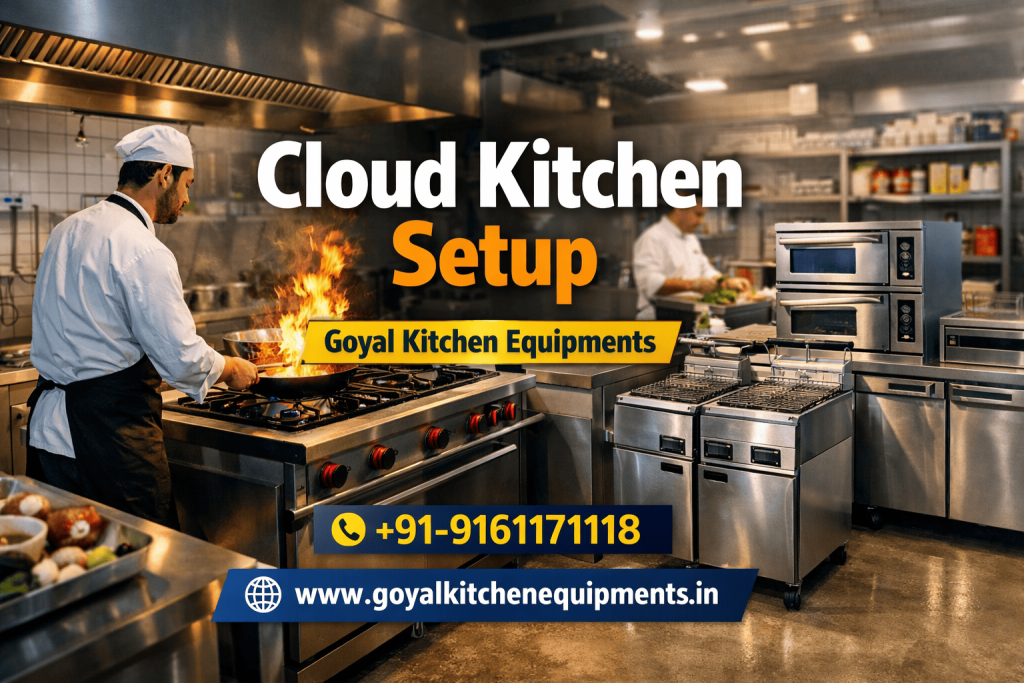
Start Your Cloud Kitchen Business with Expert Setup Solutions from Goyal Kitchen Equipments
Imagine turning a single kitchen into a money-making machine that feeds hundreds without a single customer walking through the door. Cloud kitchens, those delivery-only spots, have exploded in popularity. In 2025 alone, the global market hit over $100 billion, fueled by folks craving quick meals on their phones.
These setups skip fancy dining rooms and focus on speed and efficiency. You handle orders from apps like Uber Eats or DoorDash, packing food straight for the road. But success hinges on smart planning and top-notch gear.
That’s where solid infrastructure comes in. Without the right tools, you’ll face delays, waste, and unhappy eaters. Goyal Kitchen Equipments steps up here, offering durable machines built for non-stop action. They help you craft a space that pumps out orders fast, keeping costs low and profits high.
Conceptualizing Your Cloud Kitchen Model and Layout Strategy
Think about your cloud kitchen as a busy backstage crew for a hit show. Every role matters, from cooking to packing. Start by picking your path: one brand or many under one roof?
Defining Your Virtual Brand Portfolio
You might run a solo burger joint or juggle tacos, salads, and pasta in the same spot. Multi-brand setups let you test flavors without extra rent. Target niches like vegan eats or late-night bites to stand out.
Assess your menu’s demands. Simple grilled items need less gear than fried delights. Picture peak dinner rush—maybe 50 orders an hour. Draw a quick chart: list steps like chopping veggies, then cooking, and plating. This shows how much space and tools you’ll need. Scale up for growth; a small error here means bottlenecks later.
One tip: Match brands to shared prep areas. A salad line can double for wraps, saving room.
Maximizing Space Efficiency: The Golden Rule of Ghost Kitchens
Ghost kitchens often squeeze into 500 to 1,000 square feet. No room for waste. Aim for 100 square feet per workstation in high-volume spots, per industry stats from the National Restaurant Association.
Go vertical with shelves that reach the ceiling. Stack pots and pans smartly. Design your layout like a racetrack—stations in a loop so staff grab items without crossing paths. This cuts steps by 30%, boosting speed.
Ergonomic touches matter too. Place sinks near prep zones to avoid soggy floors. Test the flow with mock runs before launch. You’ll dodge chaos when orders flood in.
Navigating Regulatory Compliance and Licensing
Rules keep your kitchen safe and legal. Check local health codes for handwashing stations and pest control. Fire safety means clear exits and alarms that work.
Permits vary by city—some need zoning approval for food ops. Budget $5,000 to $10,000 for basics like business licenses. Miss one, and fines pile up fast.
Hire a local expert early. They’ll spot issues like improper waste disposal. Stay compliant, and your cloud kitchen runs smooth for years.
Essential Cooking Equipment for High-Volume Production
Your cooking gear is the heart of the operation. Pick wrong, and meals turn out cold or burnt. Focus on pieces that handle 200-plus orders daily without breaking a sweat.
Thermal Cooking Stations: Ovens, Grills, and Fryers
Gas grills heat quick for steaks, while electric suits precise baking. In Indian spots, gas tandoors shine for naan. Combi ovens steam and bake, cutting cook times by half versus old convection models.
For fryers, deep ones hold 50 pounds of oil—perfect for fries or samosas. Match fuel to your menu; gas saves on electric bills in hot climates. Goyal Kitchen Equipments offers models with easy-clean filters.
Ventilation is key. A hood needs 200 CFM per linear foot over grills. Poor air flow means greasy walls and health violations. Install right, and your kitchen stays fresh.
Refrigeration and Cold Storage Solutions
Reach-in fridges grab ingredients fast from the line. Walk-ins store bulk for multi-day preps. Under-counter units fit tight spots without hogging floor.
NSF certification ensures safe temps below 41°F for raw meats. Split storage by zones: one for dairy, another for veggies. This stops bacteria spread.
A food safety pro once said, “Layer your fridge like a filing cabinet—oldest stock front and center.” It cuts waste by 20%. Choose energy-efficient models to trim power costs.
Specialized Prep and Cooking Technologies
Blast chillers cool hot batches quick, locking in freshness for next-day use. Induction cooktops heat pans in seconds, ideal for stir-fries. They use less energy than gas.
These tools slash labor—prep dough in minutes, not hours. For pizza clouds, dough sheeters roll bases evenly. Invest here to match demand spikes.
Goyal’s line includes compact versions for small spaces. They boost output without extra staff.
Streamlining the Dispatch and Packaging Workflow
Once food’s ready, the rush to the door begins. A smooth dispatch area keeps orders hot and accurate. Clutter here kills your rating on apps.
The Importance of Dedicated Dispatch Stations
Set up a separate zone with 10 feet of counter for boxing. Keep it away from cooking to avoid steam messing up labels. This setup handles 100 packages per hour easy.
Use shelves for bags and tape nearby. Color-code boxes for brands—red for spicy, green for mild. It speeds packing and cuts mix-ups.
A busy pizza cloud in Mumbai uses conveyor belts to move pies straight to wrappers. Staff scan QR codes for custom notes. Simple tweaks like this keep deliveries on time.
Thermal Holding Equipment for Delivery Integrity
Heated cabinets hold meals at 140°F for 30 minutes. Insulated bags for riders trap warmth longer. Poor holding means soggy food arrives.
Choose cabinets with humidity controls for fried items. They prevent drying out. Track temps with built-in logs for health checks.
Quality gear pays off—customers tip more for piping-hot arrivals. Goyal offers stackable units that fit tight layouts.
Essential Smallwares and Utensils for Speed
Stock stainless scoops for even portions—1/4 cup for sauces. Color-coded boards keep raw chicken from salads. Big mixing bowls handle group batches.
Durable tongs and spatulas withstand daily washes. Go for heat-proof silicone to avoid melts. These basics speed assembly by 15%.
Replace worn items quarterly. Sharp knives and grippy mats prevent slips. Your team will thank you with faster shifts.
Integrating Technology and Back-of-House Operations
Tech ties it all together. From orders popping on screens to smoke alarms beeping right, smooth systems mean fewer headaches.
Point-of-Sale (POS) and Order Management Systems
Link your POS to Zomato and Swiggy feeds. Auto-sync stops double entries that delay food. Cloud-based ones let you check sales from your phone.
Pick systems with inventory tracking—flag low stock on spices mid-rush. This keeps menus live without surprises.
Integration cuts errors by 40%, per restaurant tech reports. Train staff quick; most learn in a day.
Ventilation and Fire Suppression Systems Compliance
Hoods pull grease and heat away. Over fryers, wet chemical systems douse flames fast. Grills need dry ones for oils.
Service them monthly—clogged filters spark fires. Codes demand 4-foot clearances around units.
Skip corners here; one incident shuts you down. Goyal partners with certified installers for peace of mind.
Workflow Management Software and Kitchen Display Systems (KDS)
KDS screens flash orders by priority—no more lost tickets. They sequence multi-brand runs, like burgers before salads.
Software pings alerts for hold times. Adjust recipes on the fly for shortages.
This setup shaves 10 minutes off per order cycle. Your kitchen flows like clockwork.
Sourcing and Selecting Reliable Commercial Kitchen Equipment Partners
Don’t skimp on gear—it’s your daily workhorse. Commercial picks last longer than home stuff.
Why Invest in Commercial-Grade Over Residential
Home ovens quit after hours of use; commercial ones run 12-hour shifts. They boast higher BTUs for even heat.
Energy stars mean lower bills—up to 30% savings. Warranties cover two years, with parts easy to find.
Goyal Kitchen Equipments sources from top makers. Their gear handles India’s humid vibes without rust.
Assessing Total Cost of Ownership (TCO)
Upfront price tempts, but add repairs and power use. A cheap fryer guzzles gas; a good one pays back in a year.
Lifespan hits 10 years for quality pieces. Factor training time too—simple controls mean less downtime.
Crunch numbers: TCO tools online help compare. Smart buys build profits.
Installation, Calibration, and Staff Training Support
Vendors like Goyal send pros to set up. They tweak burners for your gas line.
Calibration ensures accurate temps from go. Training sessions cover cleaning routines.
This head start boosts efficiency day one. Your team hits the ground running.
Conclusion: Building Your Profit Engine
A thriving cloud kitchen starts with clear plans, safe rules, and tough equipment. You blend layout smarts with tech to handle rushes. Goyal Kitchen Equipments makes it easier, supplying gear that stands the test of time.
Key steps ahead: Map your space and menu now. Get quotes for commercial tools suited to your volume. Check local permits before signing leases. Plan staff flows to avoid jams.
Quality setup delivers big returns—fewer wastes, happier customers, steady cash. Reach out to Goyal today. Turn your cloud kitchen dream into a delivery powerhouse.